Six Books Published in 2025
that I enjoyed
that helped me keep my sense of humor in an increasingly scary AI-driven world, that reaffirmed the value of art in my life, and suggested to me that the meaning of life remains refreshingly unsolved
but we should keep trying…
– eliza
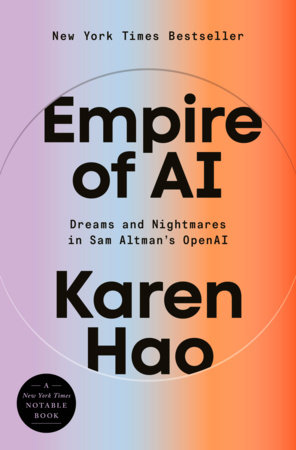
Empire of AI
Dreams and Nightmares in Sam Altman’s OpenAI
By Karen Hao
When AI expert and investigative journalist Karen Hao first began covering OpenAI in 2019, she thought they were the good guys. Founded as a nonprofit with safety enshrined as its core mission, the organization was meant, its leader Sam Altman told us, to act as a check against more purely mercantile, and potentially dangerous, forces. What could go wrong?
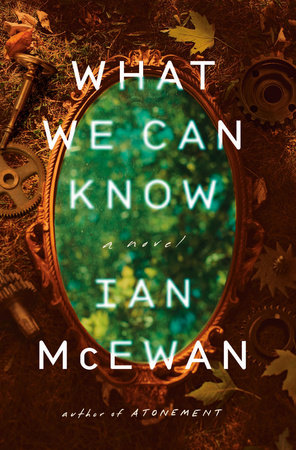
What We Can Know
A Novel
By Ian McEwan
“In the 22nd century, the planet has been decimated (populist leaders, A.I. run amok, climate disaster, resource wars, rogue nukes, tsunamis and mega death). America has become a wasteland filled with inland seas.”- Dwight Garner – NYT
Part literary detective story What We Can Know is a fictional tour de force and a love story about people and the words they leave behind (a lost poem). The novel attempts to reclaim the future ‘present’ from a sense of looming catastrophe and imagine a world in which all is not quite lost.
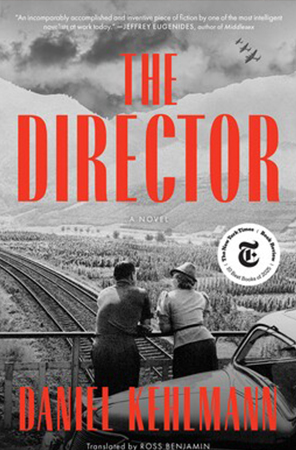
The Director
A Novel
By Daniel Kehlmann
Translated by Ross Benjamin
“How nerve-racking to be G.W. Pabst, the 20th-century Austrian filmmaker at the center of Kehlmann’s wondrous novel. He’s an auteur stuck in Europe under Nazi rule, forced to make propaganda and benign duds for the Reich while compromising every creative principle he once stood for. “The important thing is to make art under the circumstances one finds oneself in,” Pabst murmurs at one point, winning over exactly no one. Still, Kehlmann’s complex portrait, brightened by caustic humor and memorable historical cameos (and fluidly translated from the German by Ross Benjamin), presents an intriguing test of integrity in a fracturing world.” – NYT
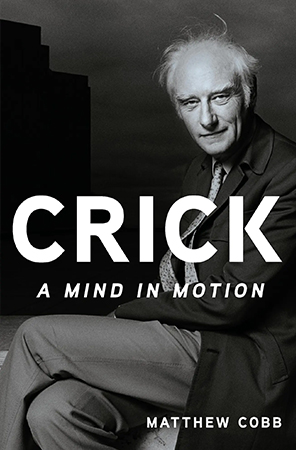
Crick
A Mind in Motion – from DNA to the Brain
by Professor Matthew Cobb
For Francis Crick, a chance encounter, with a line from the writing of Beat poet Michael McClure -“THIS IS THE POWERFUL KNOWLEDGE,” encapsulated his lifelong desire to solve the riddles of existence. John Keats once accused scientists of merely wanting to “unweave a rainbow,” but it was an irrepressible, Romantic urge to wonder that defined Crick, as much as a desire to find the basis of life in DNA and the workings of our minds.
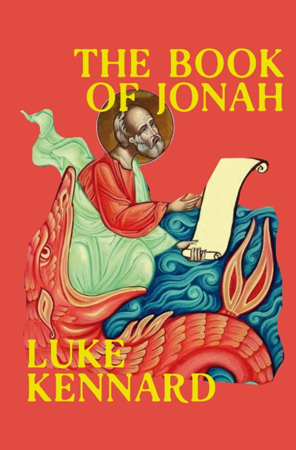
The Book of Jonah
A Book of Poetry
by Luke Kennard
In his signature style – part surreal, part satirical – Kennard reimagines the biblical story through the lens of modern absurdity and wit.
Jonah is known for disobeying direct instruction from God and literally running away. In The Book of Jonah, Luke Kennard transforms this attitude into a madcap picaresque which marries the sacred and the absurd. On his travels he meets writers, fixers, artists and consultants, but nobody can give him a sense of what his work might be beyond a five-star capitalist purgatory in a series of exotic locations. This is funny book, for poetry. More on Luke’s good taste- read this.
Sound is not great but listen here.
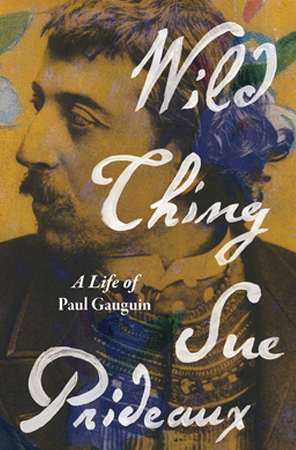
Wild Thing
A Life of Paul Gauguin
by Sue Prideaux
Self-taught, Gauguin became a towering artist in his brief life, not just in painting but in ceramics and graphics. He fled the bustle of Paris for the beauty of Tahiti, where he lived simply and worked consistently to expose the tragic results of French Colonialism. Gauguin fought for the rights of Indigenous people, exposing French injustices and corruption in the local newspaper and acting as advocate for the Tahitian people in the French colonial courts. His unconventional career and bold, breathtaking art influenced not only Vincent van Gogh, but Matisse and Picasso